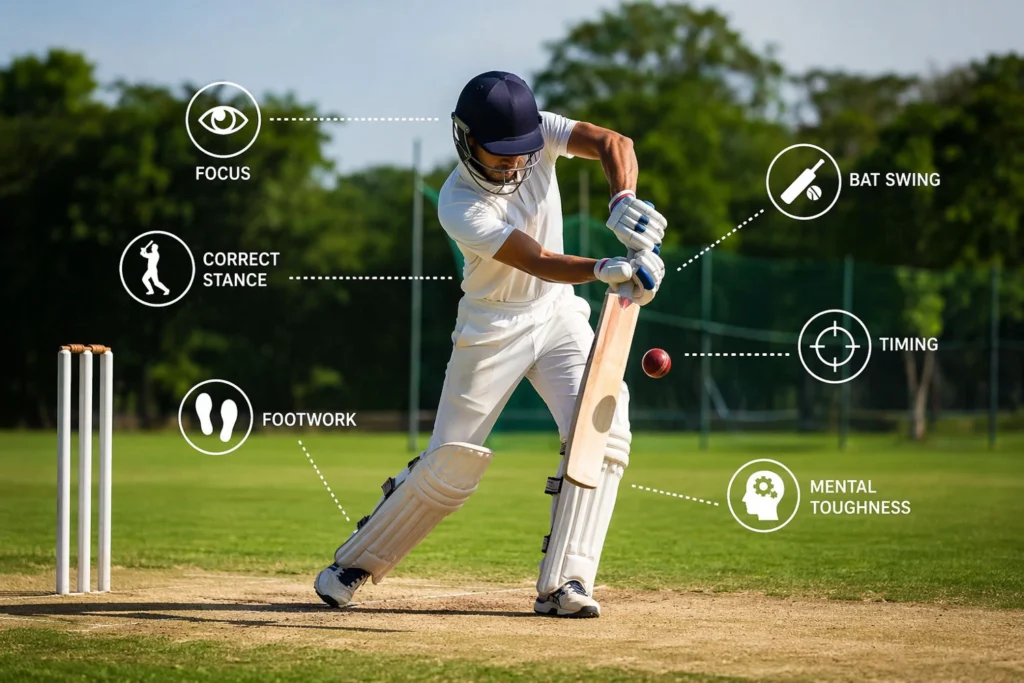

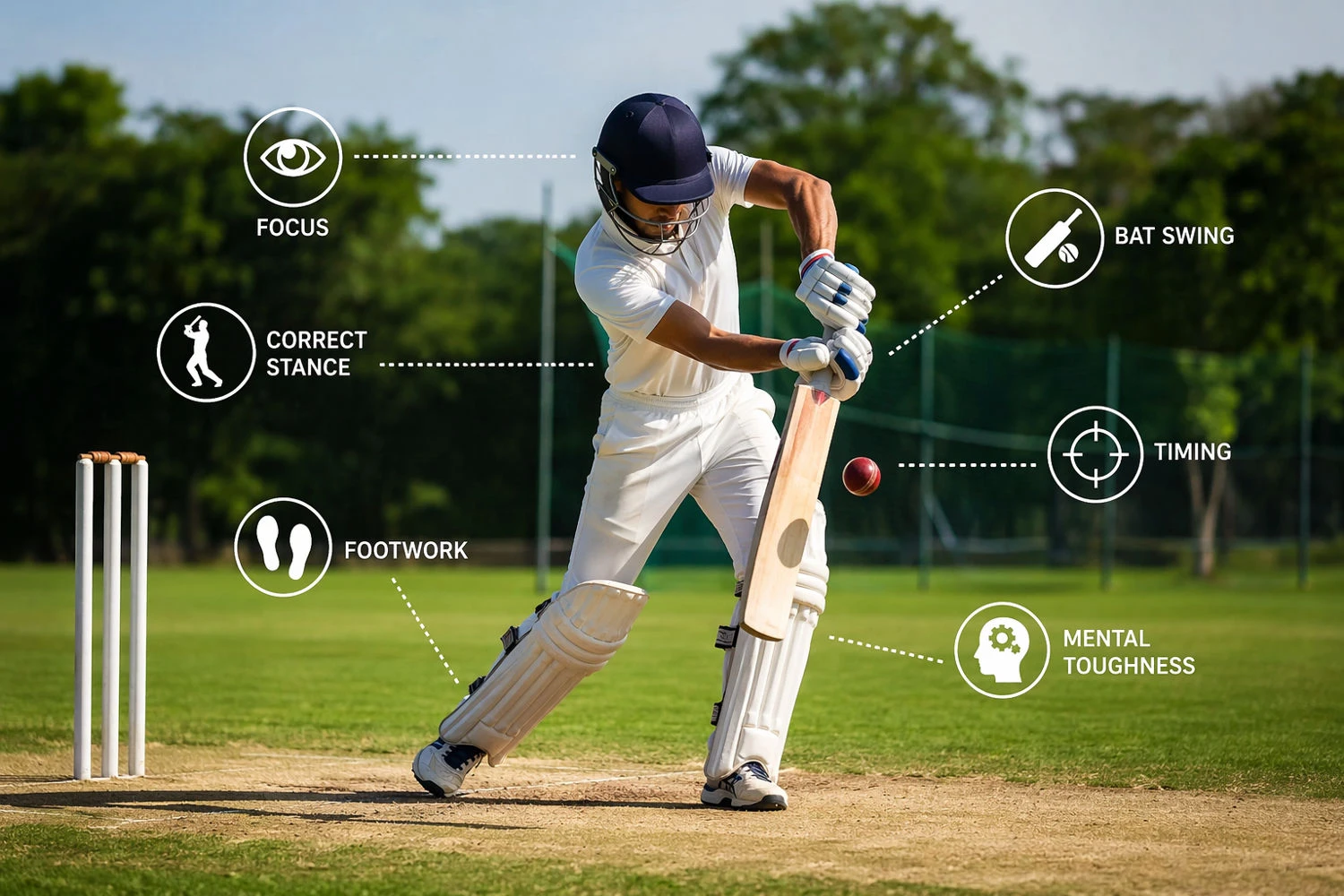
Cricket is often described as a game of inches and split-second decisions. Whether you are an aspiring club cricketer or a seasoned player looking to refine your craft, knowing how to improve cricket batting skills is the difference between a golden duck and a match-winning century.
In this exhaustive guide, we will break down the mechanics of world-class batting into actionable steps, covering technique, physical conditioning, and the psychological edge required to dominate the bowlers.
Perfecting the Fundamentals
Before you can hit a six like Rohit Sharma or cover drive like Virat Kohli, you must master the basics. Without a solid foundation, your technique will crumble under pressure.
The Stance: Your Launchpad
Your stance should provide balance and comfort.
Feet Placement: Keep your feet shoulder-width apart, parallel to the How to improve cricket batting skills How to improve cricket batting skills crease.
Weight Distribution: Distribute your weight evenly on the balls of your feet. Avoid leaning too far forward or backward.
Head Position: This is the most critical aspect. Your head should be still, eyes level, and slightly over your front shoulder.
The Grip: Control and Power
Most professionals use the “V-Grip.” Form a ‘V’ with your thumb and index finger on both hands, aligning them down the back of the bat.
Top Hand: Provides control and direction (Firm grip).
Bottom Hand: Provides power (Relaxed grip until the point of contact).
Master the Footwork
Footwork is the bridge between seeing the ball and hitting it. If your feet are stuck, you’ll likely find yourself caught in the crease.
Front Foot Play
For full-pitched deliveries, you must lead with your head and front shoulder. Step toward the pitch of the ball to smother the swing and spin.
Back Foot Play
For short-pitched deliveries, shift your weight to the back foot. This gives you more time to react to the bounce, allowing for pulls, hooks, and cut shots.
The Art of Shot Selection
Knowing how to improve cricket batting skills involves discipline. You don’t have to hit every ball.
Leave the Ball: In longer formats, leaving balls outside the off-stump saves your wicket.
Respect the Good Balls: Play defensively against deliveries that hit the “corridor of uncertainty.”
Punish the Loose Balls: Full tosses and half-volleys should be dispatched to the boundary.
High-Intensity Batting Drills
Practice doesn’t make perfect; perfect practice makes perfect. Use these drills to build muscle memory.
The Drop Ball Drill
Have a partner stand on a bench and drop balls in front of you. Practice your drive by stepping forward and hitting the ball into a net. This improves your timing and head position.
Shadow Batting
Stand in front of a mirror and practice your swings without a ball. Focus on your elbow position (high front elbow) and your follow-through.
The Tee Drill
Place a ball on a batting tee. Practice hitting it straight. This helps in perfecting the “V” play (hitting between mid-on and mid-off).
Enhancing Hand-Eye Coordination
In cricket, you have less than 0.5 seconds to react to a fast bowler.
Tennis Ball Training: Use a tennis ball against a wall. The extra bounce and speed force your hands to move faster.
Colored Ball Drill: Have someone throw different colored balls at you. Call out the color before you hit it. This trains your brain to focus on the ball instantly.
Physical Fitness for Batsmen
Batting for long periods requires more than just skill; it requires stamina and core strength.
Core Strength: A strong core allows for better rotation during power shots.
Flexibility: Focus on hip and shoulder mobility to prevent injuries during lunges.
Interval Training: Cricket involves short bursts of sprinting (running between wickets). Incorporate shuttle runs into your routine.
7. The Mental Game: Developing a “Century” Mindset
Many players have the talent, but few have the temperament.
Visualization: Before a game, visualize yourself hitting boundaries and navigating tough spells.
Pre-Ball Routine: Develop a ritual (like tapping the crease or adjusting your gloves) to reset your focus before every delivery.
Stay in the Present: Don’t think about the previous ball or your total score. Focus only on the ball currently leaving the bowler’s hand.
Analyzing Your Game with Technology
In the modern era, data is your best friend.
Video Analysis: Record your net sessions. You’ll often find flaws (like a falling head or a crooked bat) that you can’t feel while playing.
Bat Sensors: Use IoT sensors to track your bat speed and angle of impact.
Common Mistakes to Avoid
If you want to know how to improve cricket batting skills, you must stop doing these:
Playing Across the Line: Early in your innings, try to play straight.
Losing Sight of the Ball: Ensure you watch the ball right until it hits the bat.
Being Too Rigid: Relaxation is key. Tense muscles lead to slow reactions.
Specialized Tips for Different Formats
Test Cricket: Focus on defense, patience, and leaving the ball.
ODI Cricket: Focus on strike rotation (singles/doubles) and building a middle-over partnership.
T20 Cricket: Focus on “360-degree” hitting, clearing the boundary, and innovative shots like the ramp or reverse sweep.
Choosing the Right Gear
Believe it or not, your equipment plays a massive role in how to improve cricket batting skills. If your bat is too heavy, your footwork will be sluggish; if your gloves are too stiff, you lose “feel” for the handle.
Bat Weight and Balance: To truly understand how to improve cricket batting skills, you must find a bat that feels like an extension of your arm. A “pick-up” that is too heavy will ruin your timing.
Protective Gear: Confidence is key to how to improve cricket batting skills. Wearing high-quality pads and a well-fitted helmet allows you to face fast bowlers without the fear of injury, letting you focus entirely on your technique.
The Right Grip: Regularly changing your bat grip ensures a firm hold, which is a simple yet effective way regarding how to improve cricket batting skills by maintaining better blade control.
Conclusion
- Learning how to improve cricket batting skills is a marathon, not a sprint. It requires hours of “boring” drills, a willingness to learn from failures, and an obsession with the fundamentals. Start with your stance, move to your footwork, and eventually, the runs will follow.
By following this guide and putting in the work at the nets, you are well on your way to becoming the batsman your team can rely on. Grab your gear, head to the pitch, and start practicing!
FAQ
1. How can I improve my timing while batting in cricket?
To improve timing, focus on watching the ball closely until the point of contact rather than trying to hit it too hard. Developing a high front elbow and staying relaxed allows the bat to flow naturally. Regular drills with a tennis ball or using a bowling machine at varying speeds can also help your brain sync with the ball’s pace.
2. What is the best way to improve footwork against fast bowlers?
The best way to improve footwork is through short-ball drills and shadow batting. Practice moving your back foot across and back to get into position for pulls and cuts. For full deliveries, work on “leading with the head”—where your head goes, your feet will follow. Using a “batting ladder” or agility cones can also enhance the speed and precision of your feet.
3. How do I stop getting out LBW or Bowled frequently?
These dismissals usually happen because of a falling head or playing across the line. Ensure your head remains still and aligned with the off-stump at the point of delivery. Focus on “playing straight” (hitting between mid-on and mid-off) during the first 15–20 balls of your innings to ensure your bat is coming down in a straight line.
Read more:Best budget tennis rackets for beginners