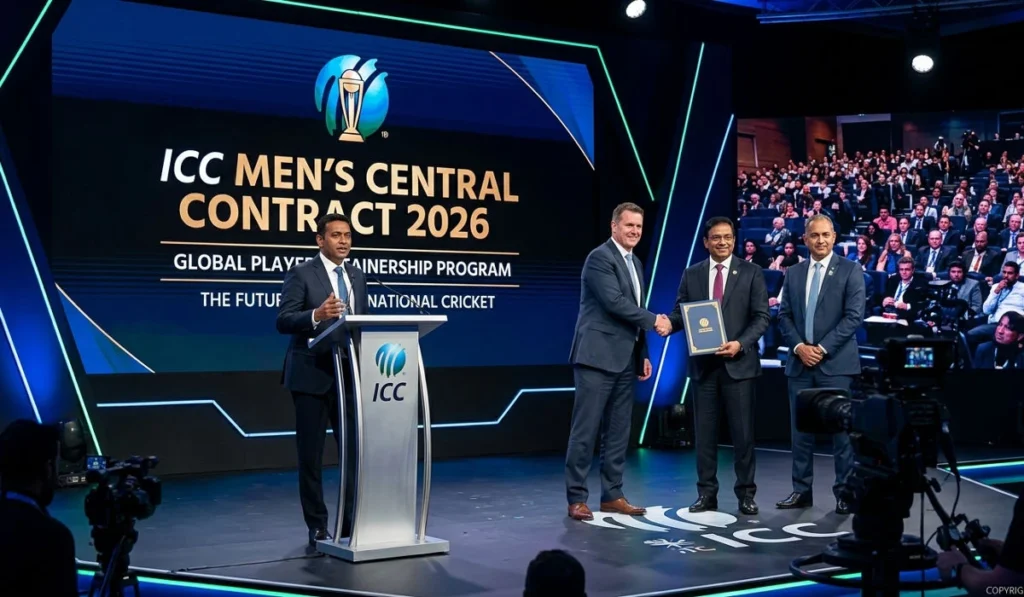

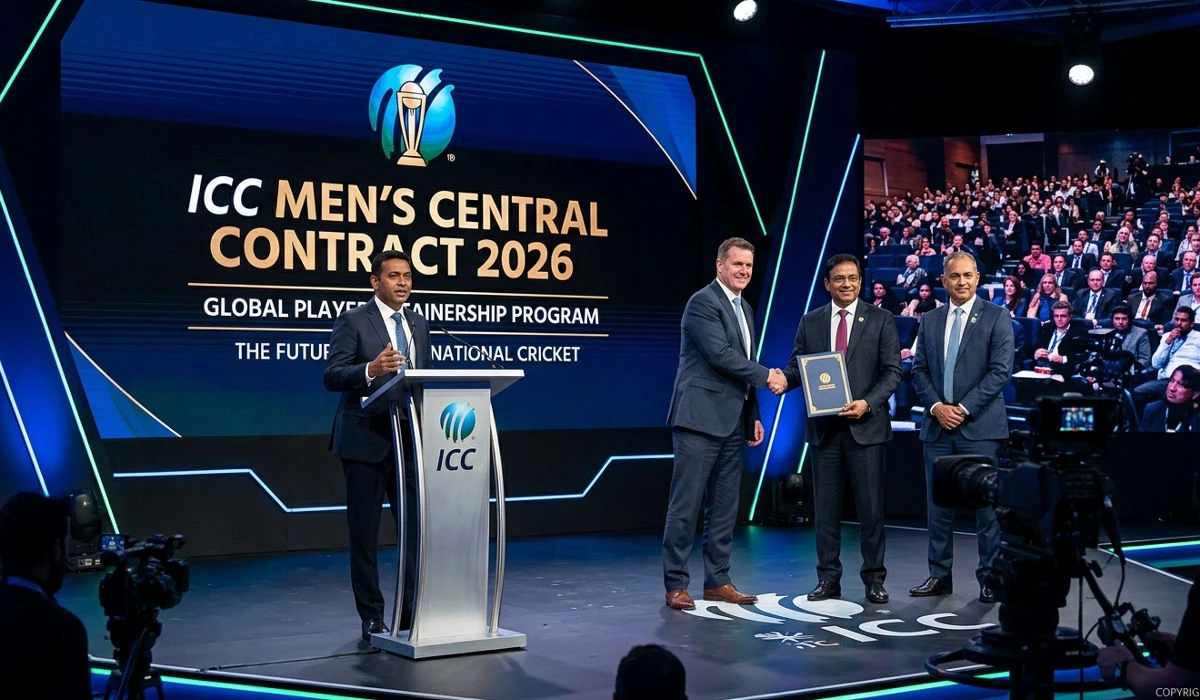
The ICC Men’s Central Contract 2026 cycle has brought some of the most significant changes in the history of international cricket. As the sport moves towards a more specialized format-based approach, major cricket boards—under the governance and framework of the International Cricket Council (ICC)—have overhauled their player retainership structures.
From the BCCI’s decision to scrap the elite A+ category to the BCB’s expansion of their player pool, the 2026 season is all about rewarding multi-format consistency and nurturing young talent. In this comprehensive guide, we will look at the player lists, salary structures, and the new rules governing the ICC Men’s Central Contract 2026.
What is the ICC Men’s Central Contract 2026?
A central contract is an annual agreement between a national cricket board and a player. It guarantees a base salary (retainer fee) regardless of how many matches the player actually plays, ensuring financial security for the athletes. The ICC Men’s Central Contract 2026 refers to the collective landscape of these contracts across full-member nations like India, Bangladesh, Australia, and England for the 2026 calendar year or the 2025–26 seasonal cycle.
BCCI Central Contract 2025-26
The Board of Control for Cricket in India (BCCI) announced a massive restructuring for their 2025-26 cycle, which remains the most talked-about part of the ICC Men’s Central Contract 2026 discussions.
1. The End of Grade A+
For the first time in years, the BCCI has removed the “Grade A+” category. Previously, this was reserved for players who played all three formats. For 2026, the highest tier is now Grade A.
2. Top Tier Players (Grade A)
Only three players have secured a spot in the highest bracket this year. These players are considered the backbone of the Indian team across formats.
Shubman Gill (Test and ODI Captain)
Jasprit Bumrah
Ravindra Jadeja
Key Trends in the ICC Men’s Central Contract 2026
The ICC Men’s Central Contract 2026 cycle highlights several transformative trends in the world of professional cricket. One of the most prominent shifts is the introduction of format-specific contracts, where boards like Australia and England now offer specialized deals for players who focus exclusively on T20Is or Test matches. This allows for a more flexible salary structure and better workload management for the athletes. Additionally, there is a massive focus on youth; younger talents such as Shubman Gill and Harry Brook are now being prioritized for top-tier slots as senior legends move into the twilight of their careers. Finally, the inclusion of heavy performance-based incentives ensures that players are rewarded not just for their presence, but for high-impact results like winning ICC trophies, maintaining top player rankings, or securing away series victories. These changes collectively reflect a more modern and results-oriented approach to international cricket management.
Bangladesh (BCB) Central Contract 2026 Updates
The Bangladesh Cricket Board (BCB) has also released its list for the ICC Men’s Central Contract 2026 period. The BCB has increased its contracted player count from 22 to 28 to build a stronger bench for the upcoming ICC T20 World Cup 2026.
BCB Grade A Players
The elite list for Bangladesh includes:
Najmul Hossain Shanto (Captain)
Mehidy Hasan Miraz
Litton Das
Taskin Ahmed
Rising Stars in Grade B and C
Young performers like Rishad Hossain and Tanzid Hasan Tamim have been promoted to Grade B following their stellar performances in the 2025 season.
Key Trends in the ICC Men’s Central Contract 2026
Format-Specific Contracts
Many boards are now offering contracts based on specific formats. If a player only plays T20Is, they are placed in a different tier than those playing Test matches. This trend is highly visible in the ICC Men’s Central Contract 2026 lists for Australia and England.
Focus on Youth
The 2026 lists show a clear transition. Young players like Shubman Gill (India), Rachin Ravindra (New Zealand), and Harry Brook (England) are now occupying the top-tier slots previously held by veterans.
Performance-Based Incentives
In addition to the base retainer, the ICC Men’s Central Contract 2026 framework includes heavy bonuses for
Winning ICC Trophies.
Top 5 Rankings in ICC Player Stats.
Winning Away Test Series.
Full List of Players (Global Highlights)
While every country has its own list, here are the most notable inclusions in the ICC Men’s Central Contract 2026 across the globe:
Australia: Pat Cummins, Travis Head, and Mitchell Marsh remain in the top tier.
Pakistan: Babar Azam and Shaheen Afridi lead the Category A list.
South Africa: Aiden Markram and Kagiso Rabada are the highest earners.
New Zealand: Focus has shifted to youth after the retirement of several senior pacers.
Why the ICC Men’s Central Contract 2026 Matters for SEO and Fans
For website owners and sports bloggers, the ICC Men’s Central Contract 2026 is a high-traffic keyword. Fans are constantly searching for “Who is the highest-paid cricketer?” or “Is Virat Kholi still in the A+ grade?”. Understanding these contract details helps in predicting player availability for leagues like the IPL or BBL, as centrally contracted players often need “No Objection Certificates” (NOCs) to play in private leagues.
FAQ
1. Who are the highest-paid players in the ICC Men’s Central Contract 2026?
In the 2026 cycle, top-tier players like Shubman Gill, Jasprit Bumrah, and Ravindra Jadeja (India), along with Pat Cummins (Australia) and Najmul Hossain Shanto (Bangladesh), are among the highest earners. Most boards have moved toward rewarding multi-format consistency with elite-grade salaries.
2. Why was the A+ Grade removed from the BCCI 2026 contract?
The BCCI restructured the ICC Men’s Central Contract 2026 to simplify the grading system. By removing the A+ category, the board consolidated elite performers into a single Grade A bracket, focusing on players who are central to the team’s long-term strategy across major formats.
3. How does the ICC Men’s Central Contract 2026 benefit young players?
The 2026 contracts prioritize “Future Stars” by offering them higher-grade retainers earlier in their careers. Boards are now using performance-based incentives and format-specific deals to ensure that young, specialized talents are financially supported while transitioning into international leadership roles.
Conclusion
The ICC Men’s Central Contract 2026 signifies a new era in cricket. With the removal of old categories and the rise of new leaders like Shubman Gill, the financial landscape of the sport is reflecting the change in on-field power. Whether you are a fan of India, Bangladesh, or any other cricketing nation, these contracts define who will lead the charge in the upcoming global tournaments.
Read more: India Women vs South Africa Women T20 2026