
The eyes of the sporting world are turning toward Southern California as Summer Olympics 2028 venue preparations move into a critical phase. With the Games scheduled to run from July 14 to July 30, 2028, Los Angeles is setting a global precedent by redefining how a host city prepares for the world’s largest multi-sport event. Unlike previous hosts that spent billions on new “white elephant” stadiums, LA28 is embracing a model of “radical reuse.”
This comprehensive guide explores the current status of venue readiness, the innovative “sports park” concept, and the infrastructure projects that will define the success of the XXXIV Olympiad.
The LA28 Philosophy
One of the most striking aspects of the Summer Olympics 2028 venue preparations is the commitment to sustainability. For the first time in modern Olympic history, the host city is not constructing a single new permanent venue specifically for the Games.
Instead, the organizing committee is leveraging Los Angeles’ existing world-class infrastructure. By utilizing legendary stadiums, cutting-edge professional arenas, and university facilities, LA28 aims to minimize environmental impact and eliminate the long-term financial burden often associated with hosting the Olympics.
Key Benefits of the Reuse Model
Reduced Carbon Footprint: Avoiding large-scale concrete construction significantly lowers the Games’ embodied carbon.
Economic Responsibility: Funds are redirected toward transit and community programs rather than temporary steel and glass.
Historical Continuity: Iconic venues like the Los Angeles Memorial Coliseum will host their third Olympic Games, bridging the gap between 1932, 1984, and 2028.
Major Venue Clusters and Sports Parks
To streamline logistics and enhance the spectator experience, the Summer Olympics 2028 venue preparations are organized into distinct “Sports Parks.” These clusters allow fans to see multiple sports in a single geographic area.
The Downtown Los Angeles (DTLA) Zone
The heart of the city will serve as a primary hub for several high-profile events.
Crypto.com Arena: This legendary indoor venue will host gymnastics, continuing its legacy as a premier sports destination.
LA Convention Center: Planned to house fencing, judo, table tennis, and wrestling.
Dodger Stadium: The historic home of the LA Dodgers will welcome baseball and softball back to the Olympic program.
The Exposition Park Zone
Located near USC, this zone is steeped in Olympic history.
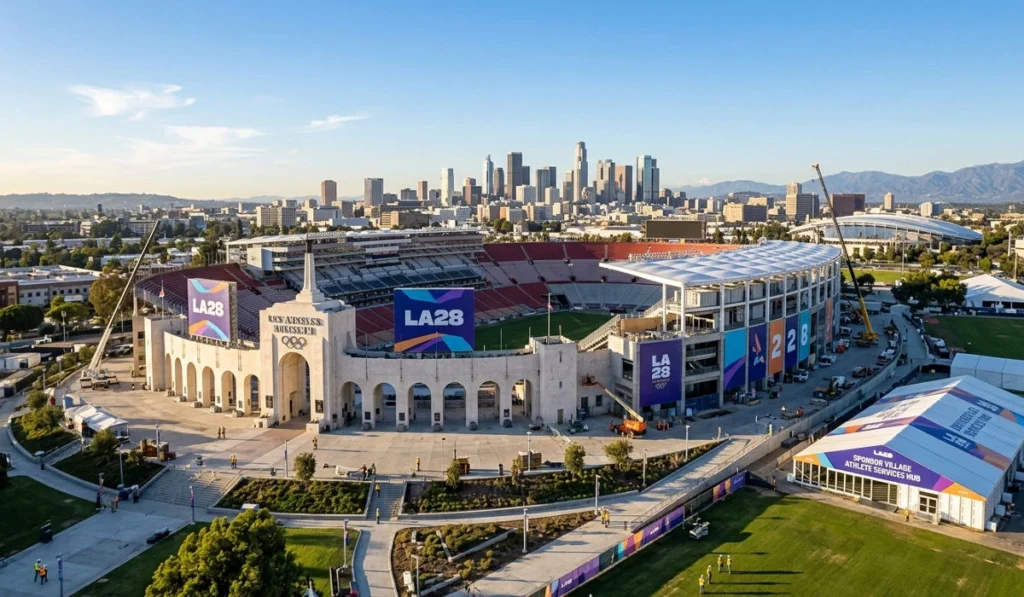
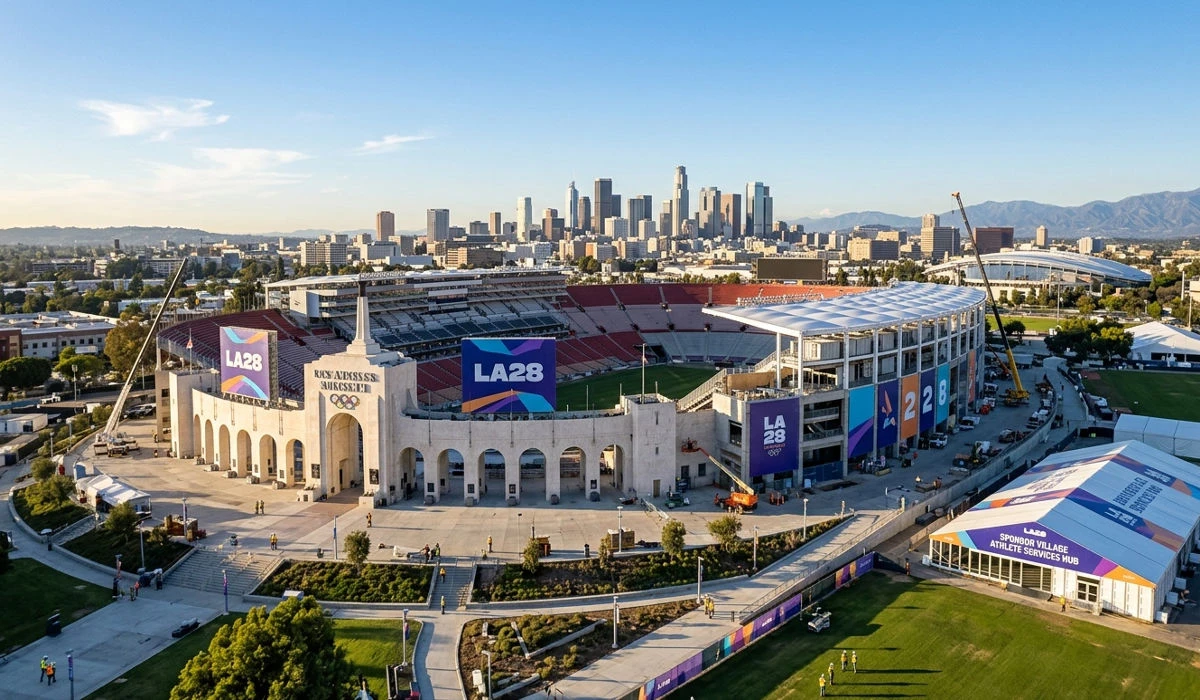
LA Memorial Coliseum: This stadium will make history by hosting athletics (Track & Field) for the third time. Preparations are focused on temporary modifications to accommodate modern broadcasting and athlete needs.
BMO Stadium: Home to LAFC, this modern stadium will host football (soccer) matches.
Read More:Rafael Nadal French Open 2026 Fitness Update
The Valley Zone (Sepulveda Basin)
A major focus of the Summer Olympics 2028 venue preparations in the San Fernando Valley involves transforming the Sepulveda Basin into a high-energy youth sports hub.
Events: BMX racing, skateboarding, and archery will take place here, utilizing temporary seating and infrastructure designed to be removed and recycled post-Games.
The Carson and Long Beach Zones
Carson (Dignity Health Sports Park): This cluster will host rugby sevens, tennis, and track cycling at the VELO Sports Center.
Long Beach: Known for its waterfront beauty, Long Beach will host sailing, marathon swimming, and triathlon events.
The “Radical” Venue Shifts
Perhaps the most ambitious part of the Summer Olympics 2028 venue preparations is the plan for swimming events. Typically held in dedicated aquatics centers, swimming in 2028 will take place inside SoFi Stadium in Inglewood.
By installing a state-of-the-art temporary pool inside the $5 billion NFL stadium, LA28 can accommodate up to 38,000 spectators—the largest crowd in Olympic swimming history. This move demonstrates the “adaptive reuse” strategy at its finest, turning a football cathedral into an aquatic theater.
The “Twenty by ’28” Initiative
While the stadiums are already built, the city’s transport infrastructure is undergoing a massive overhaul. The Summer Olympics 2028 venue preparations are inextricably linked to the “Twenty by ’28” initiative, a plan to complete 28 major transit projects before the Opening Ceremony.
Highlights of the Transit Plan
The D Line (Purple Line) Extension: Extending the subway to the Westside, connecting Downtown LA to the Olympic Village at UCLA.
LAX People Mover: A crucial link to connect the airport to the regional rail system, ensuring a “car-free” experience for international visitors.
Bus Priority Lanes: Hundreds of miles of new bus-only lanes to ensure athletes and officials can navigate LA’s notorious traffic.
Sustainability and Legacy
A core pillar of the Summer Olympics 2028 venue preparations is the “Impact and Sustainability Plan.” The organizers have pledged that 90% of materials used for temporary infrastructure (like bleachers and tents) will be reused or recycled.
Furthermore, the Olympic Village will be hosted at the UCLA Campus. This avoids the need to build high-rise apartments that might sit vacant after the Games. Athletes will have access to world-class dining, training, and housing facilities that are already operational and efficient.
Challenges and Solutions in Venue Planning
Despite the “no-build” policy, Summer Olympics 2028 venue preparations face unique challenges
Traffic Management: Implementing a “Transit-First” Games in a city designed for cars.
Security Integration: Upgrading existing venues to meet the rigorous security standards of the International Olympic Committee (IOC).
The Oklahoma City Sub-site: Due to a lack of local facilities for canoe slalom and softball, these events will be held in Oklahoma City. While controversial to some, this decision reinforces the commitment to not building unnecessary new structures.
Faq
1. Where will the 2028 Summer Olympics be held?
The Games will primarily take place in Los Angeles, California, across various “Sports Parks” including Downtown LA, Santa Monica, Long Beach, and Carson. Notably, the canoe slalom and softball events will be held in Oklahoma City to utilize existing world-class facilities.
2. When are the LA28 Olympic and Paralympic Games scheduled?
The Summer Olympics 2028 are scheduled to take place from July 14 to July 30, 2028. The Paralympic Games will follow shortly after, running from August 15 to August 27, 2028.
3. What is unique about the Summer Olympics 2028 venue preparations?
The LA28 Games are unique because they follow a “no new permanent venues” policy. Instead of building new stadiums, the city is using existing world-class infrastructure and temporary facilities, making it one of the most sustainable Olympic preparations in modern history.
Conclusion
The Summer Olympics 2028 venue preparations represent a turning point for the Olympic movement. By choosing reuse over reconstruction, Los Angeles is proving that the Games can be both spectacular and responsible. As we move closer to 2028, the focus remains on fine-tuning the athlete experience and ensuring that the “City of Angels” is ready to welcome the world without leaving a trail of debt or environmental damage.