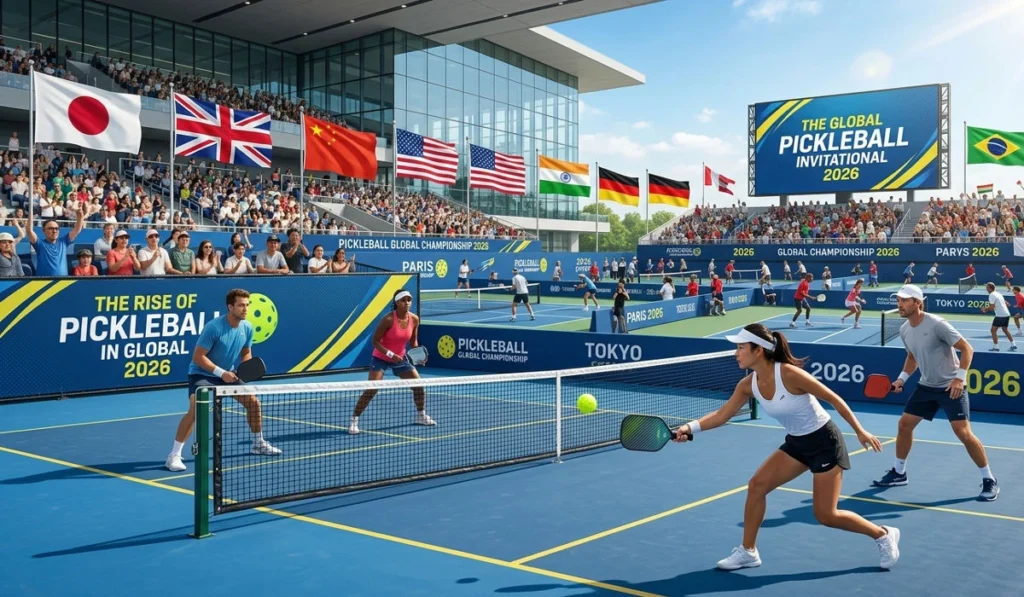

In the landscape of modern sports, few phenomena have been as explosive or as unexpected as the rise of pickleball in global 2026. What began as a backyard pastime in 1965 has officially morphed into a worldwide movement. As of 2026, pickleball is no longer just “the fastest-growing sport in America”—it is a global juggernaut that has redefined recreational and professional sports across six continents.
In this comprehensive analysis, we explore the factors driving this unprecedented expansion, the economic impact on the global market, and what the future holds for this paddle-sport sensation.
The Numbers Behind the Boom
To understand the rise of pickleball in global 2026, one must look at the staggering data. The participation rates have shattered previous projections, signaling that this isn’t just a trend, but a permanent shift in how people exercise.
Global Participation: By mid-2026, the number of active pickleball players worldwide has surpassed 35 million.
Market Valuation: The global pickleball equipment market—including paddles, balls, and apparel—is estimated to reach $2.03 billion in 2026.
International Reach: The International Federation of Pickleball (IFP) now boasts over 80 member countries, with the fastest growth seen in the Asia-Pacific and European regions.
Demographic Shift: While originally popular among seniors, the average player age has dropped to 34.8 years in 2026, with the under-25 segment being the fastest-growing demographic.
Why 2026 is the “Year of Pickleball”
Several key factors have converged to make the rise of pickleball in global 2026 a reality. These drivers are rooted in accessibility, technology, and social connection.
The “Low Barrier to Entry” Advantage
Unlike tennis, which requires years of practice to master a serve, or golf, which requires expensive memberships, pickleball is remarkably easy to learn. A beginner can be playing a competitive game within 30 minutes of picking up a paddle. This “instant gratification” has made it a favorite for schools, community centers, and corporate wellness programs.
The Social Media Catalyst
In 2026, viral “dink” clips and high-intensity professional rallies have taken over platforms like TikTok and Instagram. Influencers and celebrities—from NBA stars to Hollywood actors—regularly post content from the court, making pickleball the “cool” sport for Gen Z and Millennials.
Urban Infrastructure Adaptation
Cities worldwide are responding to the demand. In 2026, we are seeing a massive repurposing of underutilized urban spaces. Former parking lots, empty warehouses, and aging tennis courts are being converted into vibrant pickleball hubs. In the U.S. alone, the number of dedicated courts has grown by 25% year-over-year.
Global Expansion
While the U.S. remains the heart of the sport, the rise of pickleball in global 2026 is characterized by its international footprint.
Asia-Pacific: The New Powerhouse
China and India have seen a massive surge in interest. In China, the sport is being integrated into physical education curriculums, while India has seen the emergence of professional leagues that draw thousands of spectators. Asia now accounts for a significant portion of the global equipment manufacturing, with over 70% of paddles produced in the region.
Europe: Professionalization and Growth
European countries, particularly Spain, the UK, and Germany, have embraced pickleball as a year-round indoor activity. The European Pickleball Federation has standardized tournament play, leading to a more structured professional circuit that mirrors the ATP in tennis.
Economic Impact and Market Trends
The financial footprint of the rise of pickleball in global 2026 is immense. It has created an entirely new ecosystem for investors and entrepreneurs.
Equipment Innovation
In 2026, the technology behind equipment has reached new heights. We are seeing:
Carbon Fiber Dominance: Lightweight, high-performance paddles made from aerospace-grade materials.
Quiet Technology: In response to noise complaints in residential areas, manufacturers have released “silent” paddles and balls that reduce sound by up to 50%.
Smart Wearables: Tech-integrated gear that tracks swing speed, “dink” accuracy, and calorie burn.
Professional Leagues and Sponsorships
Major League Pickleball (MLP) and the PPA Tour have seen their valuations skyrocket. In 2026, sponsorship deals from blue-chip companies in the tech, automotive, and beverage sectors have brought millions of dollars in prize money, allowing players to pursue pickleball as a lucrative full-time career.
Health and Wellness Benefits
A major contributor to the rise of pickleball in global 2026 is the growing awareness of its health benefits. Medical studies published in early 2026 highlight the following
Cardiovascular Health: Regular play provides a moderate-to-vigorous intensity workout, improving heart health and longevity.
Joint-Friendly: The smaller court size means less running and lower impact on knees and ankles compared to tennis or basketball.
Mental Well-being: The social nature of the game—played in close proximity to others—has been shown to significantly reduce feelings of loneliness and anxiety.
Read More:Impact of Blue Card in Football 2026
Challenges and the Road to the Olympics
Despite its success, the rise of pickleball in global 2026 faces hurdles. The primary challenge remains the “Olympic Dream.”
Is Pickleball an Olympic Sport Yet?
As of 2026, pickleball is making its debut as a sanctioned sport in the Special Olympics USA Games. While it is not yet in the main Summer Olympics, the sport is on a “determined path” for the 2032 Brisbane Games. The International Olympic Committee (IOC) requires a sport to be widely practiced in at least 75 countries; with 80+ member countries in 2026, pickleball has officially met this quantitative threshold.
Space and Noise Conflicts
As courts pop up in residential neighborhoods, “noise pollution” remains a point of contention. However, the development of sound-dampening acoustic screens and specialized equipment is helping to mitigate these community disputes.
Technological Integration & Smart Courts
By 2026, the sport has embraced the digital age through “Smart Court” technology. Many high-end pickleball facilities now feature automated camera systems and AI-driven sensors that track player movement, shot accuracy, and ball speed in real-time. This data is instantly synced to players’ mobile apps, allowing even recreational players to analyze their performance like professionals. This “gamification” of the sport has been a massive draw for the tech-savvy Gen Z demographic.
Corporate Wellness & Team Building
A significant driver for the rise of pickleball in global 2026 is its adoption by the corporate world. Large multinational corporations have replaced traditional golf outings with pickleball tournaments. Because the sport is inclusive of different fitness levels and ages, it serves as an ideal team-building tool. Many new office complexes built in 2026 now include rooftop pickleball courts as a standard employee perk, highlighting its role in modern workplace culture.
Environmental Sustainability in Manufacturing
As global environmental standards tighten, the pickleball industry has shifted toward “Green Gear.” In 2026, leading manufacturers have introduced paddles made from recycled ocean plastics and bio-based resins. Furthermore, “ball recycling” programs have gone global, addressing the waste generated by cracked or worn-out plastic balls. This commitment to sustainability has helped the sport maintain a positive brand image among eco-conscious consumers worldwide.
Faq
1. Why is pickleball growing so fast in 2026?
The rise of pickleball in global 2026 is driven by its low barrier to entry and high social engagement. Unlike tennis, it has a short learning curve, making it accessible to all ages. Additionally, the massive repurposing of urban spaces into dedicated courts has made finding a game easier than ever.
2. Is pickleball becoming an Olympic sport?
While not yet in the main lineup for the upcoming Games, the sport has met the IOC’s requirement of being practiced in over 75 countries. As of 2026, it is a featured sport in the Special Olympics and is a top contender for inclusion in the 2032 Brisbane Olympics.
3. What is the economic impact of the sport in 2026?
The global pickleball market has reached a valuation of over $2 billion in 2026. This growth is fueled by innovations in “quiet tech” equipment, carbon fiber paddles, and massive corporate sponsorships for professional leagues like Major League Pickleball (MLP).
Conclusion
The rise of pickleball in global 2026 is a testament to the human desire for community and accessible fitness. It has transcended its “senior sport” reputation to become a cross-generational staple of global culture.