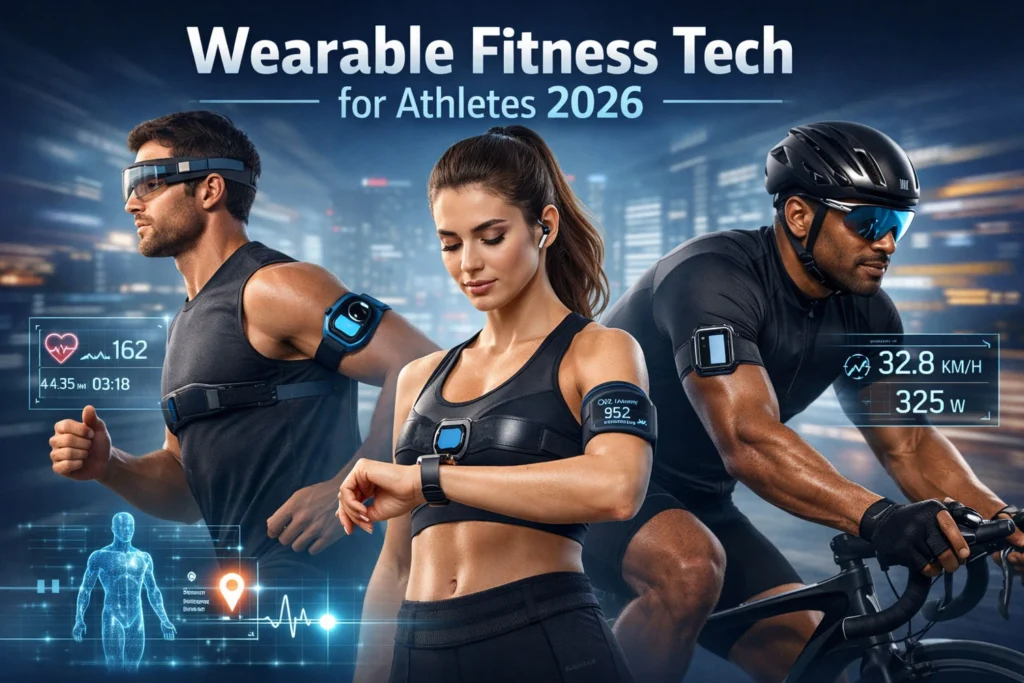

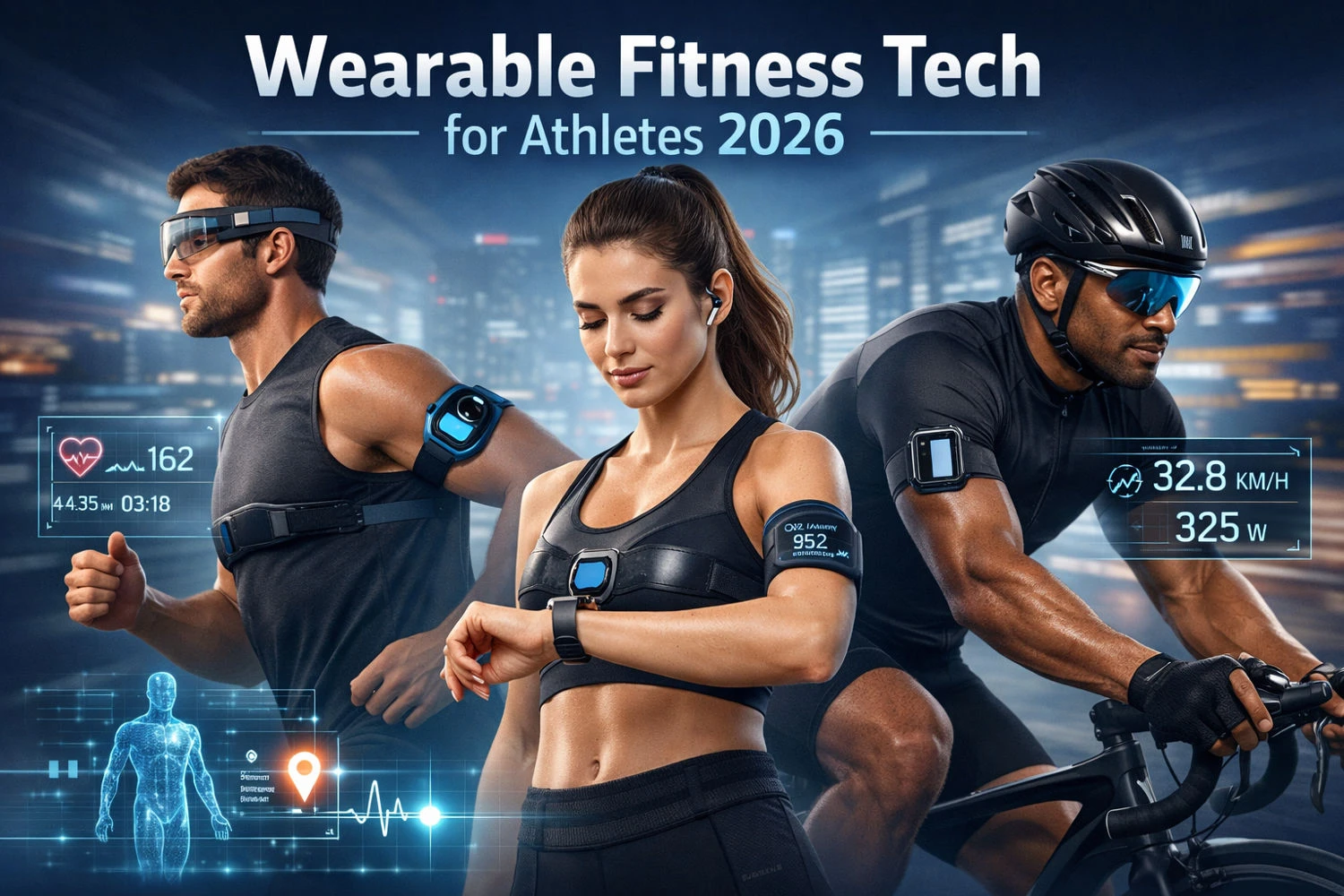
Wearable Fitness Tech for Athletes 2026The landscape of athletic performance has undergone a seismic shift. In 2026, the phrase “knowledge is power” has been replaced by “data is performance.” Whether you are an Olympic hopeful, a professional marathoner, or a dedicated hybrid athlete, the wearable fitness tech for athletes 2026 ecosystem offers tools that do more than just count steps—they predict fatigue, prevent injury, and provide real-time coaching.
In this comprehensive guide, we explore the cutting-edge innovations dominating the market this year, helping you choose the right gear to shatter your personal bests.
The Evolution of Athlete Tech
Only a few years ago, a heart rate monitor was considered “advanced.” Today, athletes are utilizing a multi-layered approach to data. The year 2026 marks the era of Invisibles and Integrals—technology that is either so small it’s forgotten or so integrated into clothing that it becomes a second skin.
Key Trends Driving the Market:
On-Device AI Coaching: Unlike previous versions that required cloud processing, the latest devices (like the Samsung Galaxy Watch7 and Garmin Venu 3) use on-device neural networks to provide instant feedback without latency.
Clinical-Grade Biometrics: With recent FDA clearances, wearables like WHOOP and Biolinq now offer medical-grade insights into blood oxygen, ECG, and even continuous glucose monitoring (CGM) for non-diabetic performance optimization.
The Rise of Smart Rings: Smart rings have officially gone mainstream, capturing a massive share of the market due to their superior form factor for sleep and recovery tracking.
Top-Rated Wearable Fitness Tech for Athletes 2026
If you are looking to upgrade your kit, these are the standout devices currently leading the industry.
The Precision Powerhouse
Garmin remains the gold standard for endurance athletes. In 2026, the Forerunner series has perfected “Running Power” metrics, calculating the exact wattage you put into the ground without needing external pods.
Best For: Triathletes, Marathoners, and Cyclists.
Key Feature: Training Readiness Score based on HRV (Heart Rate Variability), sleep, and recent load.
The Recovery King
For athletes, what happens off the field is just as important as what happens on it. Smart rings have become the go-to wearable fitness tech for athletes 2026 for monitoring recovery.
Why Athletes Love It: No bulky screen to distract you; it fits under gym gloves and provides the most accurate sleep-stage analysis in the wearable category.
The Multi-Sport Giant
With a 3,000-nit display and enhanced “WatchOS 26” features, the Ultra 3 is designed for the extreme. It now includes advanced “Stroke Detection” for swimmers and offline topographical maps for ultra-trail runners.
Beyond the Wrist
The biggest shift in wearable fitness tech for athletes 2026 is the move toward “Smart Apparel.” Wrist-based sensors are great, but they can’t capture everything.
Textile-Integrated Sensors
Companies are now weaving conductive yarns directly into compression gear. These garments track:
Electromyography (EMG): Measuring muscle activation levels to ensure balanced muscle engagement.
Kinetic Analysis: Tracking joint angles and gait symmetry to prevent ACL and hamstring injuries.
Thermal Regulation: Some smart shirts can now trigger active cooling or heating elements based on your
core body temperature.
Specialized Tech for Different Disciplines
Athletes in 2026 no longer rely on “one-size-fits-all” devices. Here is a breakdown of how specialized wearable fitness tech for athletes 2026 caters to specific sport-centric needs:
For Elite Swimmers: HUD Integration
Swimmers are now utilizing Form Smart Swim Goggles 2. These goggles feature an augmented reality (AR) display inside the lens, providing real-time data like split times, stroke rate, and distance without the athlete needing to break form to look at a watch. It’s the ultimate tool for maintaining pace in open water or the pool.
For Cyclists: Safety & AR Navigation
For those on two wheels, the integration of Garmin Varia with AR Smart Glasses has become standard. Cyclists can now see rear-approaching vehicle alerts and turn-by-turn navigation directly in their field of vision. This allows for maximum focus on power output and cadence while ensuring high-speed safety.
For Weightlifters: Velocity-Based Training
Strength athletes are moving away from traditional trackers toward the WHOOP 5.0 and dedicated limb-worn sensors. These focus on Velocity-Based Training (VBT), measuring the speed of a lift to determine muscular fatigue. It tells the athlete exactly when to push for a PR and when to scale back to avoid injury.
For Runners: Altitude & Oxygen Dynamics
Endurance runners are opting for the COROS Vertix 3, which specializes in altitude acclimation and blood oxygen monitoring. For trail and ultra-runners, this tech provides real-time “Effort Pace,” which adjusts your target speed based on the incline, air density, and your current physiological strain.
The Role of AI and Predictive Analytics
Artificial Intelligence is no longer a buzzword; it is the engine behind wearable fitness tech for athletes 2026. Modern AI engines can now:
Predict Illness: By detecting subtle changes in your baseline skin temperature and RHR (Resting Heart Rate) up to 48 hours before symptoms appear.
Optimize Nutrition: Integrating with CGM (Continuous Glucose Monitors) to tell an athlete exactly when to “carb-load” or “refuel” during a long-distance event.
Prevent Over-training: Generating “Nudges” to suggest a rest day when your nervous system shows signs of fatigue, even if you feel mentally “ready.”
Privacy and Data Security in 2026
With great data comes great responsibility. In 2026, new regulations require explicit athlete consent for data sharing. Top-tier brands have implemented On-Device Processing, meaning your biometric data is analyzed locally on your watch or ring rather than being sent to a vulnerable cloud server. This is a crucial consideration for professional athletes under strict contract regulations.
How to Choose the Right Wearable for You
When selecting your wearable fitness tech for athletes 2026, ask yourself these three questions:
What is my primary goal? (Recovery vs. Live Performance Tracking)
What is my environment? (Open water, mountain trails, or indoor gym
Do I want a screen? (Distraction-free rings vs. data-rich smartwatches)
Quick Checklist
Before you click “buy,” ensure your chosen wearable fitness tech for athletes 2026 meets these professional standards:
Data Accuracy: Does the wearable fitness tech for athletes 2026 offer clinical-grade ECG or PPG sensors?
Battery Longevity: Ensure your wearable fitness tech for athletes 2026 can last through your longest training sessions, especially if using GPS.
App Ecosystem: Check if the wearable fitness tech for athletes 2026 integrates with platforms like Strava, TrainingPeaks, or Apple Health.
Durability: Only invest in wearable fitness tech for athletes 2026 that features a titanium frame or sapphire glass for extreme environments.
FAQ
Q1: What is the most important wearable feature for athletes in 2026?
Ans: In 2026, Predictive Recovery Analysis is the most vital feature. Beyond just tracking steps, modern wearables use AI to analyze HRV (Heart Rate Variability) and sleep cycles to predict physical fatigue and illness up to 48 hours before they occur.
Q2: Are smart rings better than smartwatches for professional training?
Ans: It depends on your focus. Smartwatches (like Garmin or Apple Ultra) are superior for real-time data during active workouts. However, Smart Rings (like Oura or Ultrahuman) are often preferred for 24/7 recovery tracking and sleep monitoring due to their comfort and unobtrusive design.
Q3: How accurate is the calorie tracking in 2026 wearable tech?
Ans: Accuracy has improved significantly. By integrating Continuous Glucose Monitoring (CGM) and metabolic sensors, 2026 wearables now provide a much more precise calorie burn estimate based on your actual fuel source (carbs vs. fats) rather than just heart rate averages.
Conclusion
The wearable fitness tech for athletes 2026 is about more than just numbers; it’s about a holistic understanding of the human body. By choosing the right combination of wrist-wear, smart rings, and e-textiles, you can gain a competitive edge that was once reserved for elite labs and professional sports franchises.
Investing in these tools today means you aren’t just training harder—you’re training smarter.
Read more:The Top 10 Sports Events in 2026